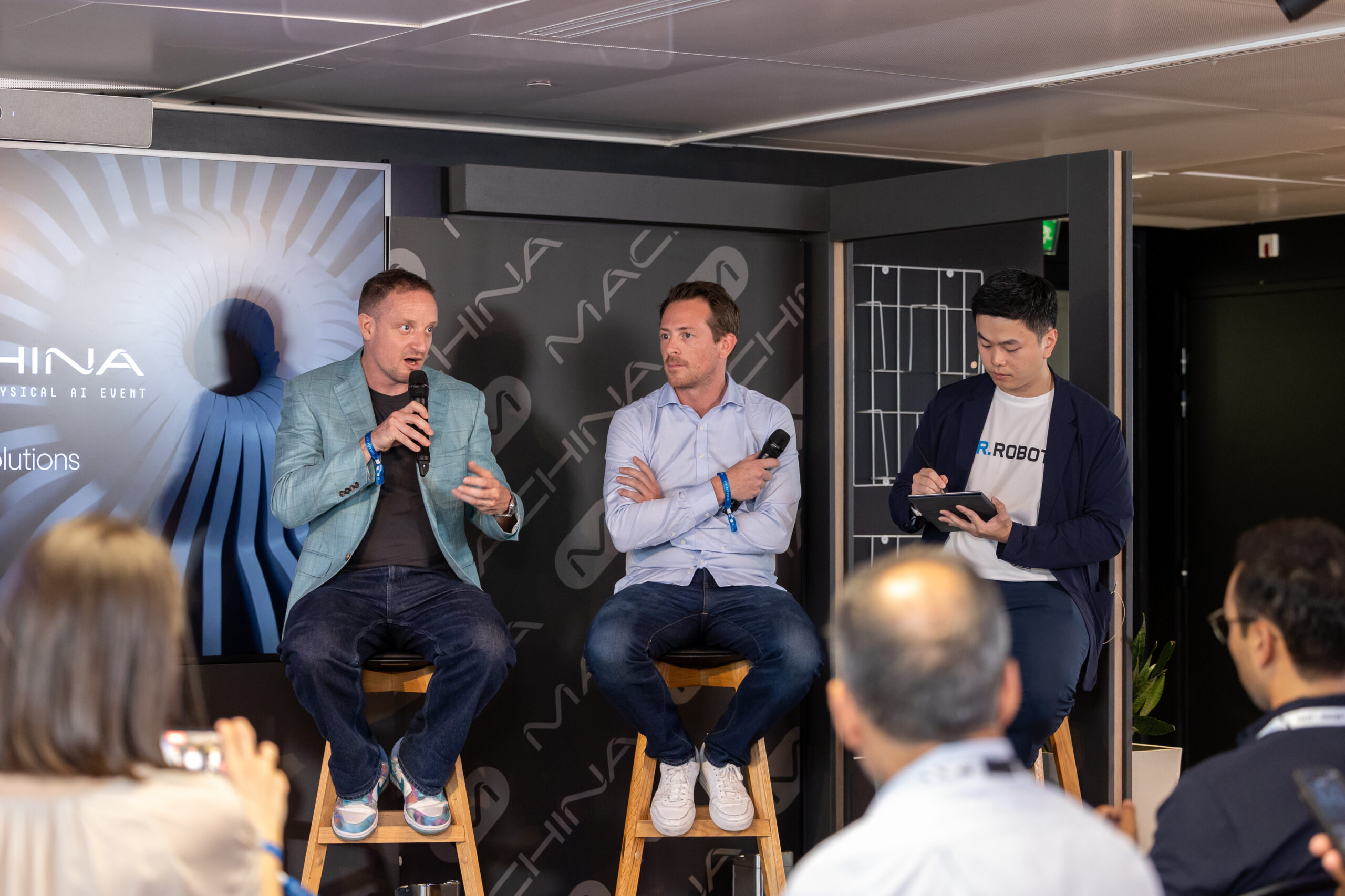
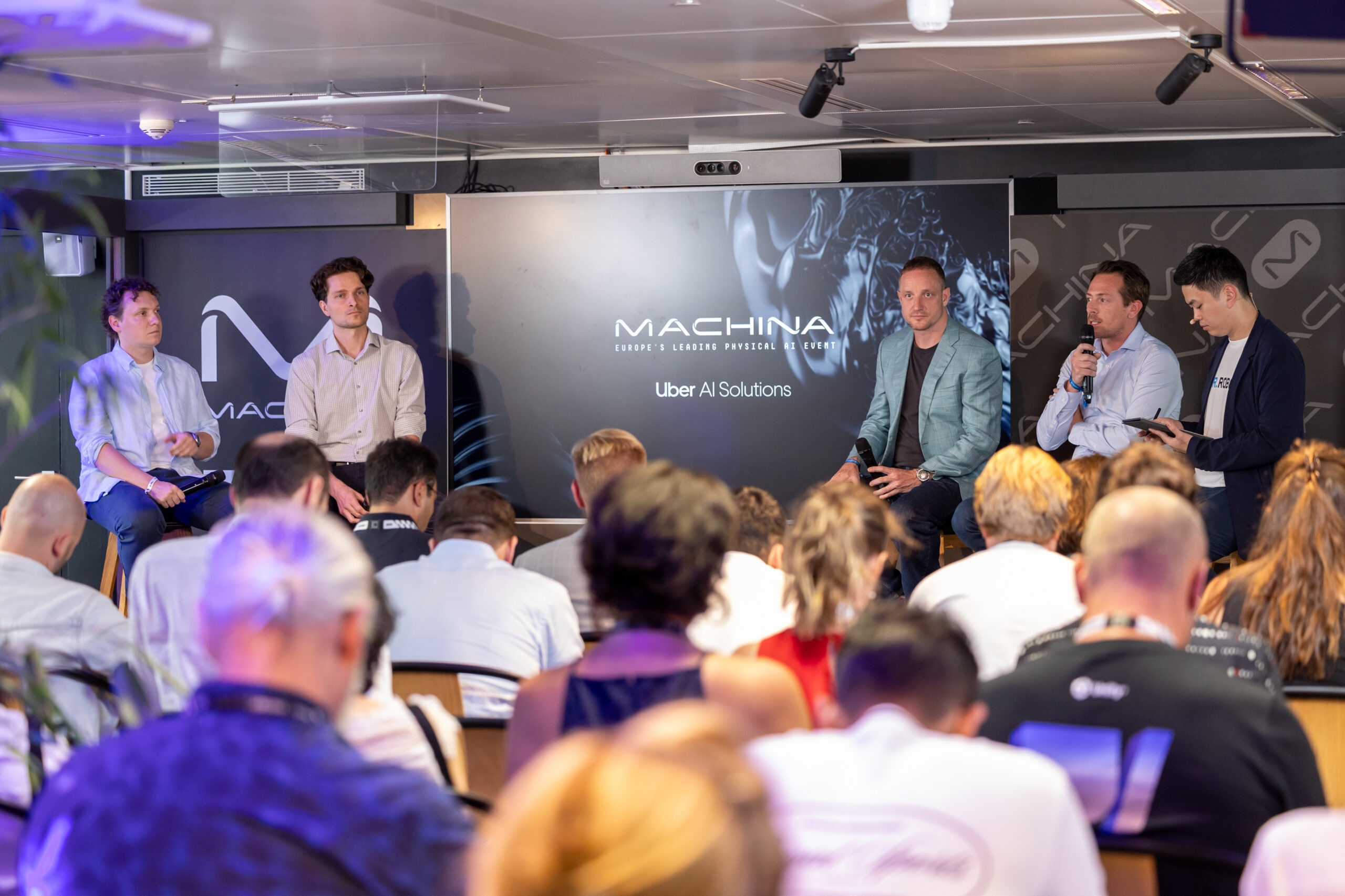
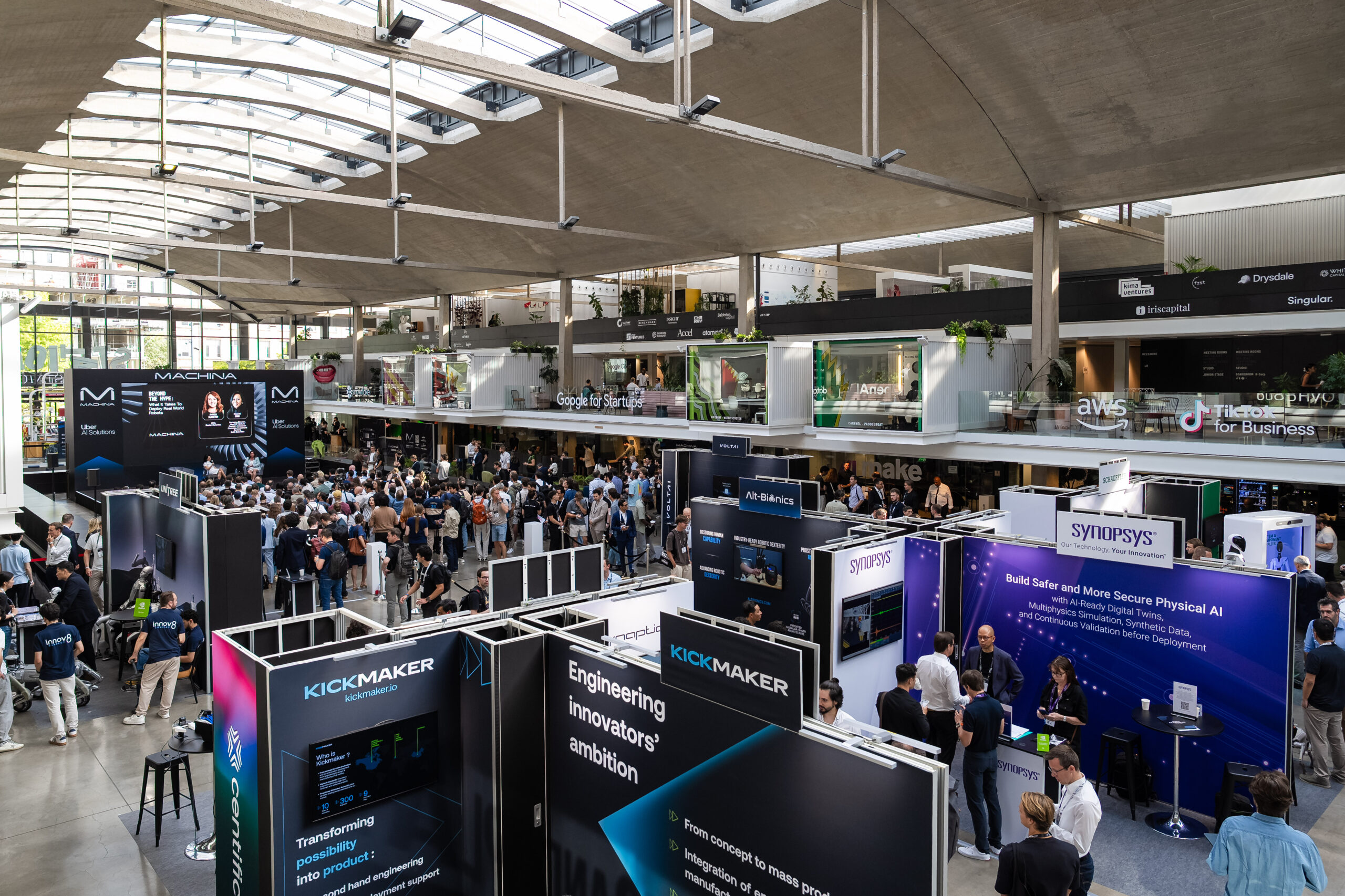
A couple of weeks ago, Kickmaker’s CEO and co-founder Vincent Despatin took the stage at MACHINA Summit for a panel on why does the gap between a successful pilot and a real, scalable factory deployment keep swallowing companies whole? Here is what he had to say.
Investment is accelerating, technologies are genuinely maturing, and the geopolitical race between China and the US is reshaping both the supply chain and the competitive landscape at speed with Europe beginning to build its own answer.
The opportunity is real and growing. But here’s what nobody wants to say plainly: almost nothing on the market today is truly deployment ready. Robot level dexterity and autonomous decision-making are still being figured out. System level integration, safety, and security remain largely unsolved for real-world factory environments. The gap between what’s being showcased and what’s ready to run at scale is far wider than the industry is willing to admit.
Ten years of industrializing hardware give me a clear view of why.
The transition nobody talks about
A prototype and a manufacturable product aren’t two points on a continuum they’re fundamentally different things that require different teams, different skills, and an entirely different way of working. The single most repeated mistake I see companies make is sending their R&D engineers to handle industrialization. They know how to built something that works but not something that has to be that has tobe assembled a thousand times by a manufacturer.
That’s not a critique, it’s a phase transition, and staffing for the wrong phase is where most hardware projects quietly die.
The most dangerous prototype is the one that works too well
When a prototype is elegant and functional, the pressure to ship becomes overwhelming, and the team resists any change because it already does what it’s supposed to do. But it works because your best engineer hand-tuned every unit, using components you can’t source at volume, tested under conditions that bear little resemblance to a real factory floor at scale.
The validation cycle from Engineering Validation through Design Validation to Production Validation exists precisely to break that illusion before your customer does. A tooling change after production launch costs between €10,000 and €100,000 per mold. It is not a software patch.
10 robots are not 1,000 robots
The jump from 10 to 1,000 deployed units is where companies consistently break not because they can’t build enough robots, but because they treated a systems architecture problem as if it were a volume problem.
Five decisions you must take:
- Fleet software: you cannot SSH into 1,000 robots; remote monitoring, OTA updates, and anomaly detection must be designed in from day one.
- Supply chain commitments: lead times for actuators, compute, and sensors currently run 16 to 34 weeks; wait for orders before placing them, and you’ve already missed your window.
- Field service model: who fixes robot #347 when it fails at 2am in a factory? That answer needs to exist at unit #50, not unit #500.
- Telemetry: at 10 units, manual log review is manageable; at 1,000, you need automated anomaly detection and fleet-level dashboards.
- Regulatory pipeline: CE marking, ISO 13849, IEC 62443; these timelines are real and cannot be compressed under deadline pressure.
Building these architectures correctly at design stage costs almost nothing. Retrofitting them in production costs a great deal.
The robot is NOT the product
This was the line I closed with on stage. The robot itself represents roughly 30% of the value delivered and 30% of the cost of a deployment. The remaining 70% is integration, software, maintenance, training, and change management, and that 70% is precisely where deployments succeed or fail and where, honestly, nobody is truly ready yet.
There’s another dynamic that rarely gets discussed: the buyer changes between pilot and deployment. The person who championed your pilot is not the person who signs the fleet contract. That conversation happens with procurement, finance, and the COO, who evaluate cost, reliability, and contractual risk, not technical elegance. The pilot can succeed brilliantly in one room and die quietly in the next.
The posture that converts pilots into fleet contracts isn’t optimism. It’s confident realism: ”Here’s exactly what it takes to get there and here is our plan.” That’s credibility.
The companies that will capture the value of physical AI won’t be those with the most impressive robot. They’ll be the ones who solved the harder problem first building the technical foundation, the deployment methodology, and the operational infrastructure before the market fully arrives. That’s the conviction I kept coming back to throughout that panel: physical AI is the headline, but deployment will be the story.
Kickmaker exists to help you write that story. 300 engineers across the US, Europe and China, one focus: getting hardware from prototype to factory floor.