Credits : 20minutes
One month later, what remains is not a list of products, but a set of structural truths about hardware, robotics, and innovation. These CES 2026 insights confirm a deeper shift: innovation is no longer about spectacle. It is about execution.
Robotics is not an “emerging” technology anymore. Many things now work, but working is no longer the question. The real question is now economic and industrial: what is mature, what remains fragile, and what can realistically scale in real-world conditions?
CES 2026 revealed a growing gap between technical progress and operational readiness.
Robotics at CES 2026: real progress, clear limits
Robotics dominated the floor.
The diversity and ambition on display were undeniable: service robots, logistics robots, autonomous vehicles, humanoids. Navigation, perception and locomotion have reached impressive levels of maturity, especially in constrained or semi-structured environments.
But CES also made something very clear: robotics is progressing unevenly.
Most humanoid robots presented were not fully autonomous. In the vast majority of cases, they were still largely teleoperated, supervised or executing tightly scripted behaviors.
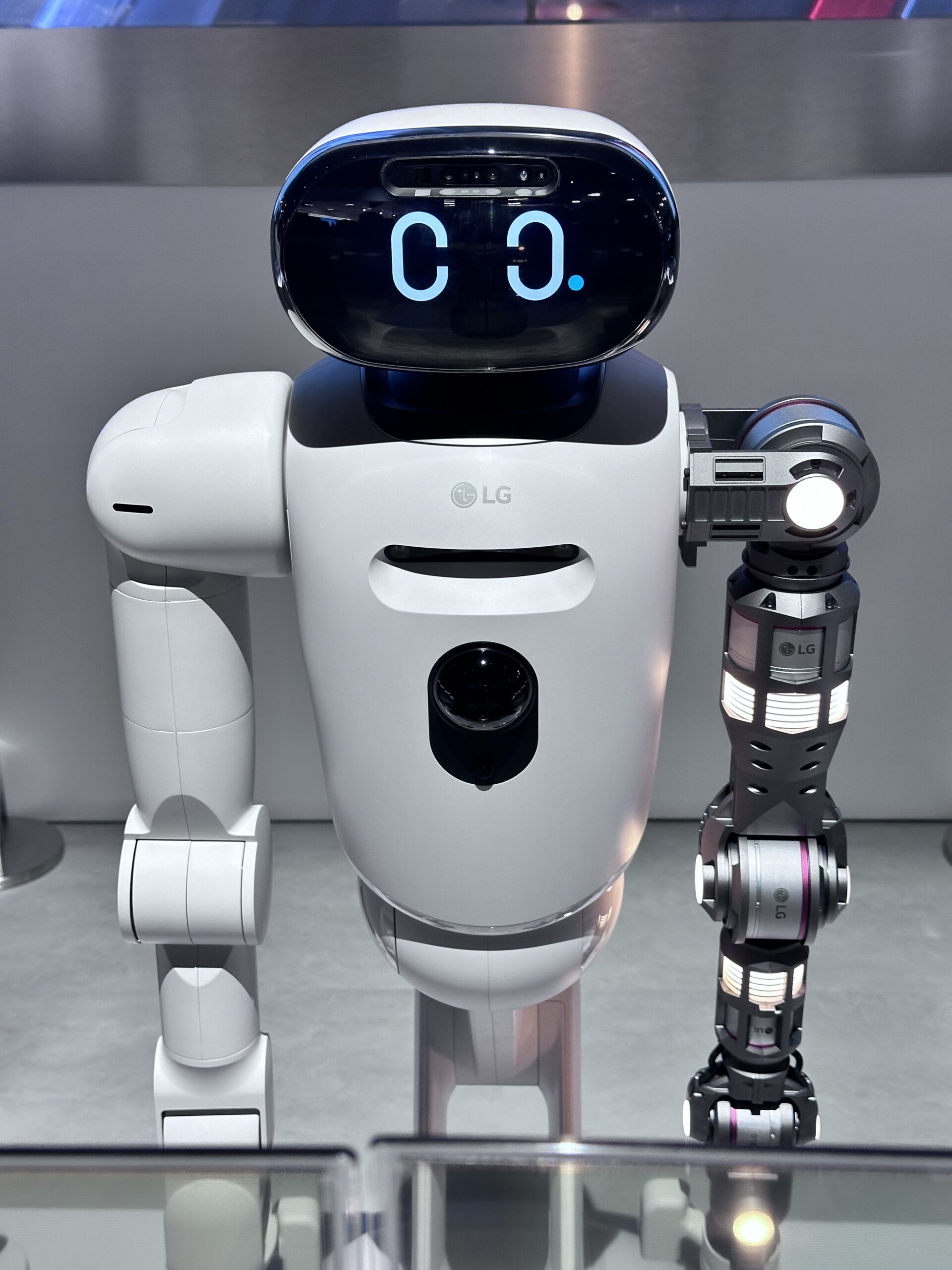
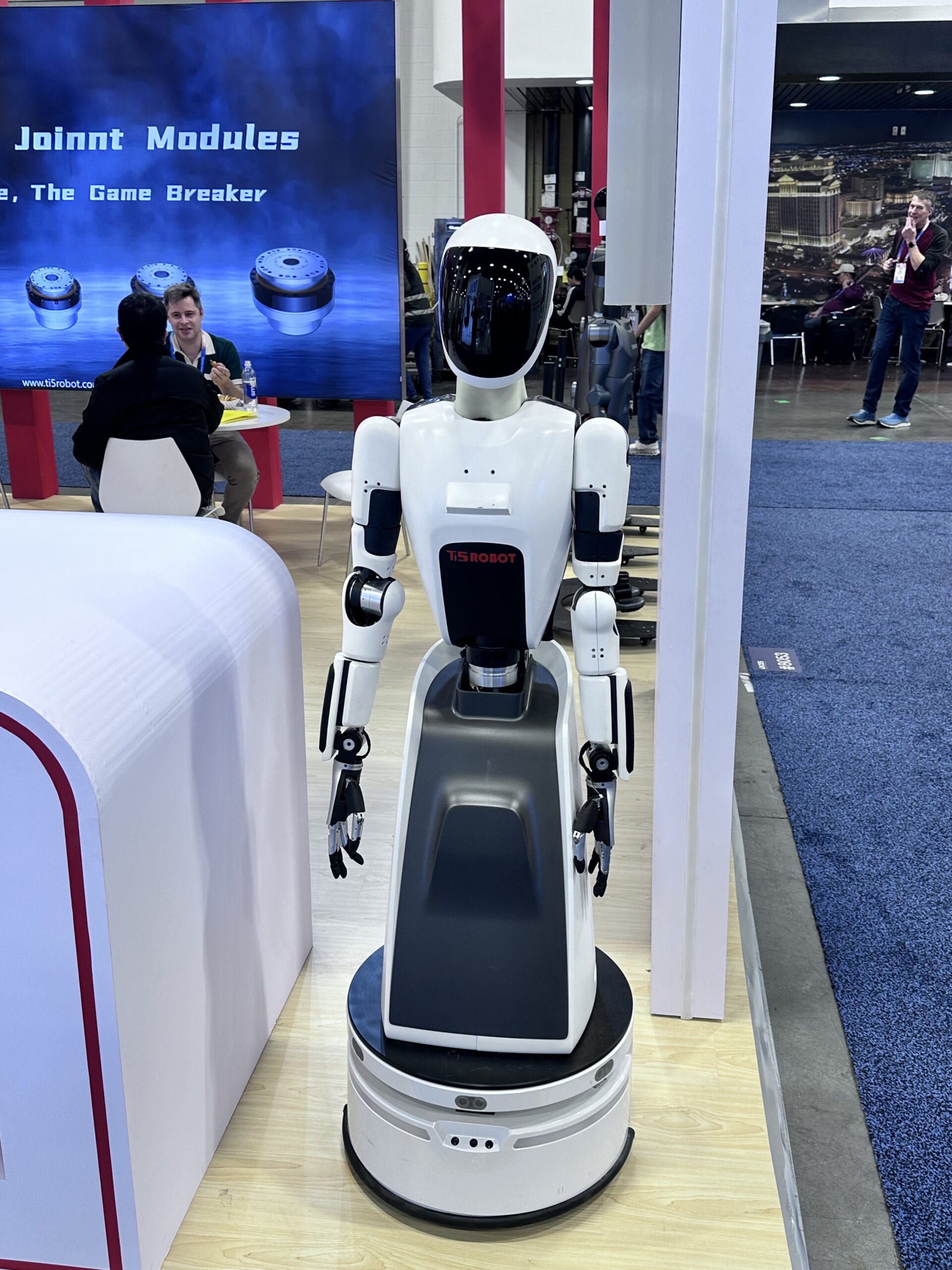
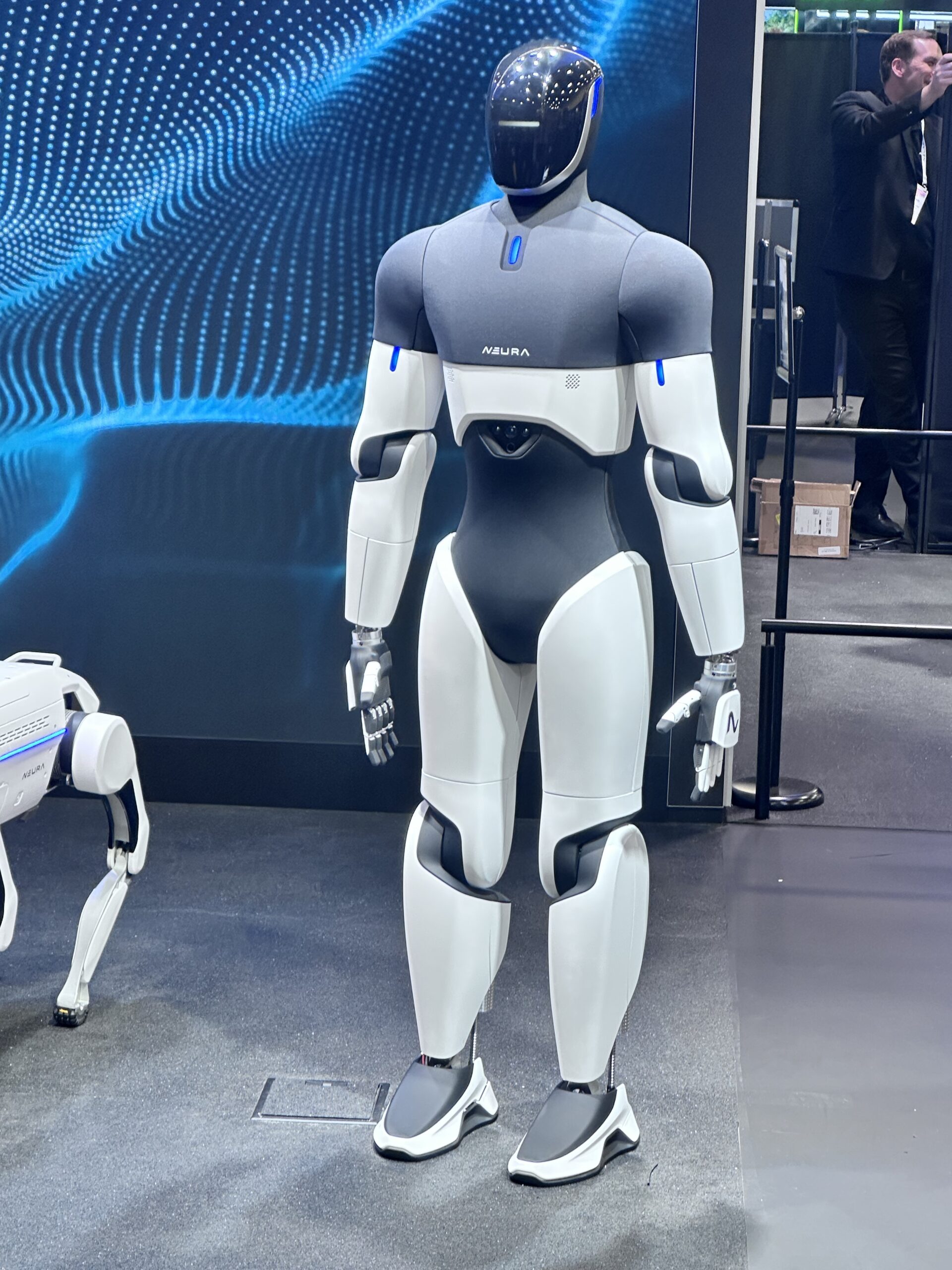
Fully autonomous humanoids operating reliably in open, dynamic environments remain several years away. CES did not showcase autonomy at scale, but autonomy under supervision.
This distinction matters, because it directly impacts deployment timelines, operational costs and ROI.
Among the players pushing humanoid robotics forward, differences in maturity are already visible. Some actors remain at the demo or experimentation stage, while others are focusing on integration, learning speed and iteration in real conditions.
Tesla stands somewhat apart in this landscape. Without overhyping its ambitions, the company appears more advanced in terms of vertical integration, learning loops and real-world iteration.
This does not mean the problem is solved but it highlights how execution, not form factor, is becoming the true differentiator.
From demos to deployment: where robotics still struggles
Very few robots shown at CES are deployed at scale in real production environments.
Most systems still lack proven 24/7 robustness, industrialized supply chains, stable learning loops in real conditions and predictable economic models. As a result, large-scale autonomous deployment remains more a late-decade objective than an immediate next step. This gap between demonstration and deployment is already visible in real projects.
Moving from a functional robot to a mass produced product requires deep system engineering and production discipline, as illustrated by the mass production journey of interactive robots such as Hease Robotics.
At the core of this gap lies a clear bottleneck: manipulation.
Locomotion, vision and navigation have reached usable levels, but manipulation remains unreliable at scale.
Robotic hands are still the critical blocker between demos and real industrial deployment. Fine dexterity, tactile feedback, micro-force control and interaction with deformable objects remain difficult to handle autonomously and consistently.
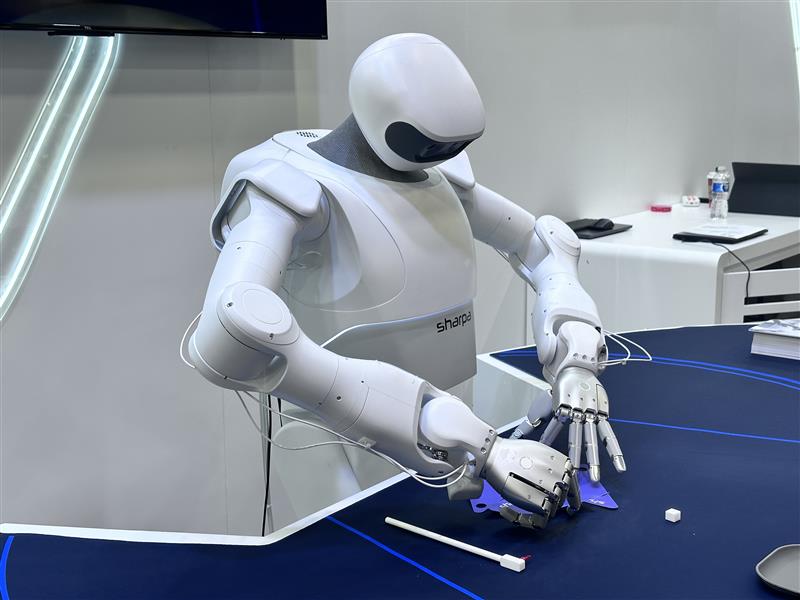
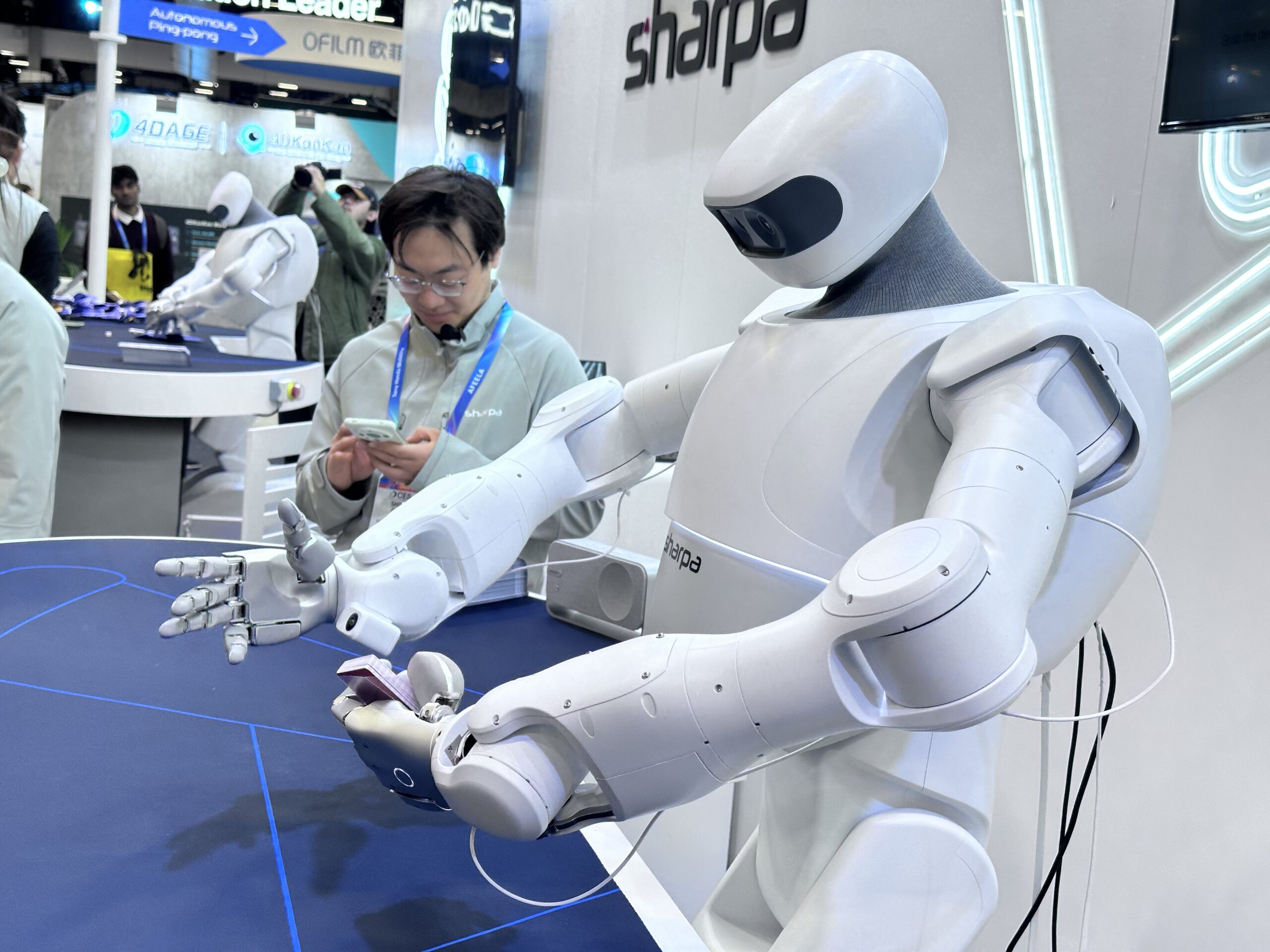
This is not a marginal limitation. Without reliable manipulation, many use cases remain theoretical, learning cycles slow down and ROI becomes uncertain.
This challenge is not about humanoid form factors. It is about system-level integration: arms, end-effectors, sensors, control loops and software must work together under real constraints challenges already visible in real projects such as our work on robotic arm integration with Enchanted Tools (Joker project).
CES 2026 did not mark a robotics breakthrough year, it marked a maturity checkpoint. Hands are not a detail; they are the difference between a demo and a product.
AI at CES 2026: powerful, but still exploratory
One message was omnipresent at CES 2026: “AI for X”.
Healthcare, security, mobility, logistics, education and manufacturing all showcased AI-driven features. Yet CES also revealed a more nuanced reality: in many products, AI remains exploratory.
Models are impressive, but often lightly integrated. Many AI-driven features are still fragile, constrained to narrow use cases or difficult to validate in real-world conditions.
At the same time, a deeper structural shift is clearly underway. AI is no longer a feature layered onto products, it is becoming the platform itself.
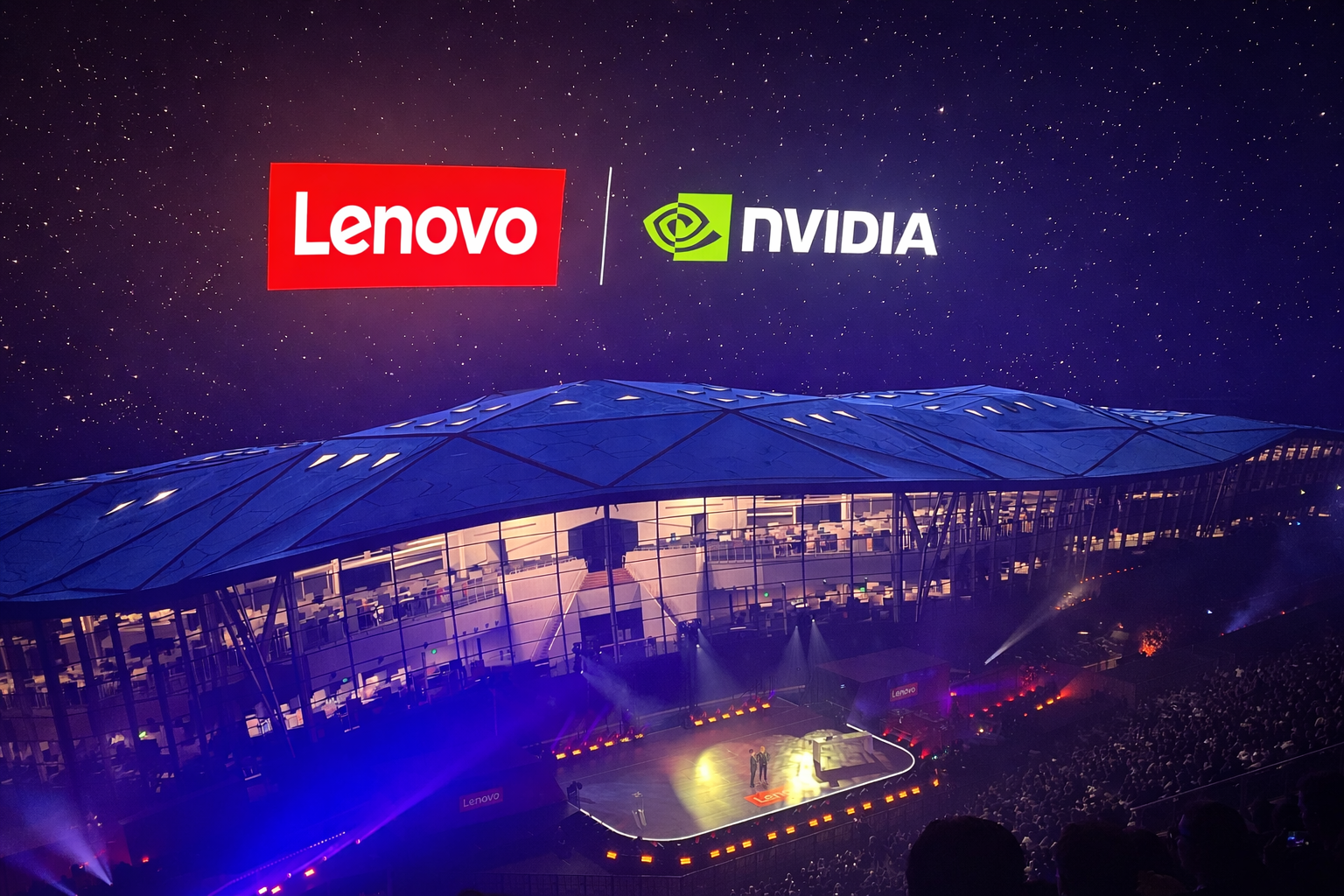
NVIDIA’s position reflects this transition. Beyond GPUs, the company now operates as a full-stack AI engine, spanning hardware, software, tools and ecosystems from edge devices to data centers. This mirrors previous platform shifts seen with IBM, Microsoft or Google.
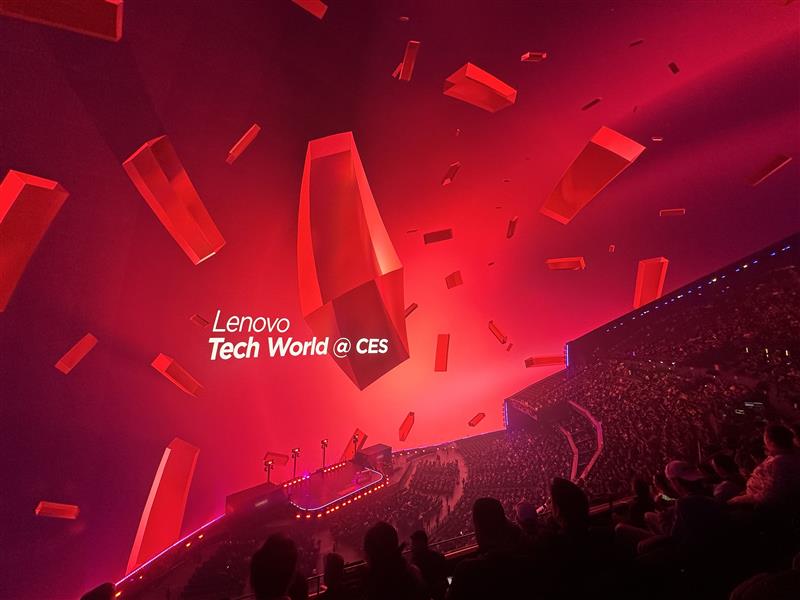
Lenovo also sent a strong signal by bringing all major chip vendors on stage. The message was clear: the future of AI devices will not be built in silos, but on ecosystems where hardware, software and AI stacks are designed together from day one.
Intel’s Panther Lake announcement reinforced the same direction. AI computing is becoming native to client hardware. Performance is no longer measured only in FLOPS, but increasingly in tokens, with computing oriented around models and data.
The implication is clear: hardware alone is no longer a differentiator. Software, data pipelines, system integration and ecosystems define long-term value.
Why software and systems will decide robotics ROI
If hardware can now be copied in months, software is where the moat has moved.
CES 2026 made the “China speed factor” visible: sensors, mechanics and even complete robots are replicated at extreme pace, with relentless cost pressure.
Hardware commoditization is accelerating.
What creates long-term value is no longer the robot itself, but everything around it: software architectures, learning pipelines, data feedback loops, system integration and ecosystems.
As this shift accelerates, intellectual property becomes a structural issue, not a legal one. When development is fragmented or poorly structured, the risk is not only imitation, but loss of control over core know-how.
This is precisely where methodology matters. At Kickmaker, our approach is designed so that clients remain fully in control of their product IP, including design, software, data and system architecture, throughout the entire development cycle. By structuring projects around clear ownership, controlled interfaces and integrated system design, this method naturally limits copycat exposure while preserving long-term differentiation.
Training robots remains slow, data-hungry and expensive. Faster chips alone do not translate into faster deployment. Without accelerated learning loops and robust robot operating systems, robotics business models stall.
This reality is well known in automation and robotics projects, where software architecture and system integration ultimately determine reliability and economic viability.
In robotics, ROI is now constrained more by software maturity than by mechanical performance.
Smart Glasses and Immersive Tech: faster cycles, clearer value
CES 2026 also highlighted a clear contrast.
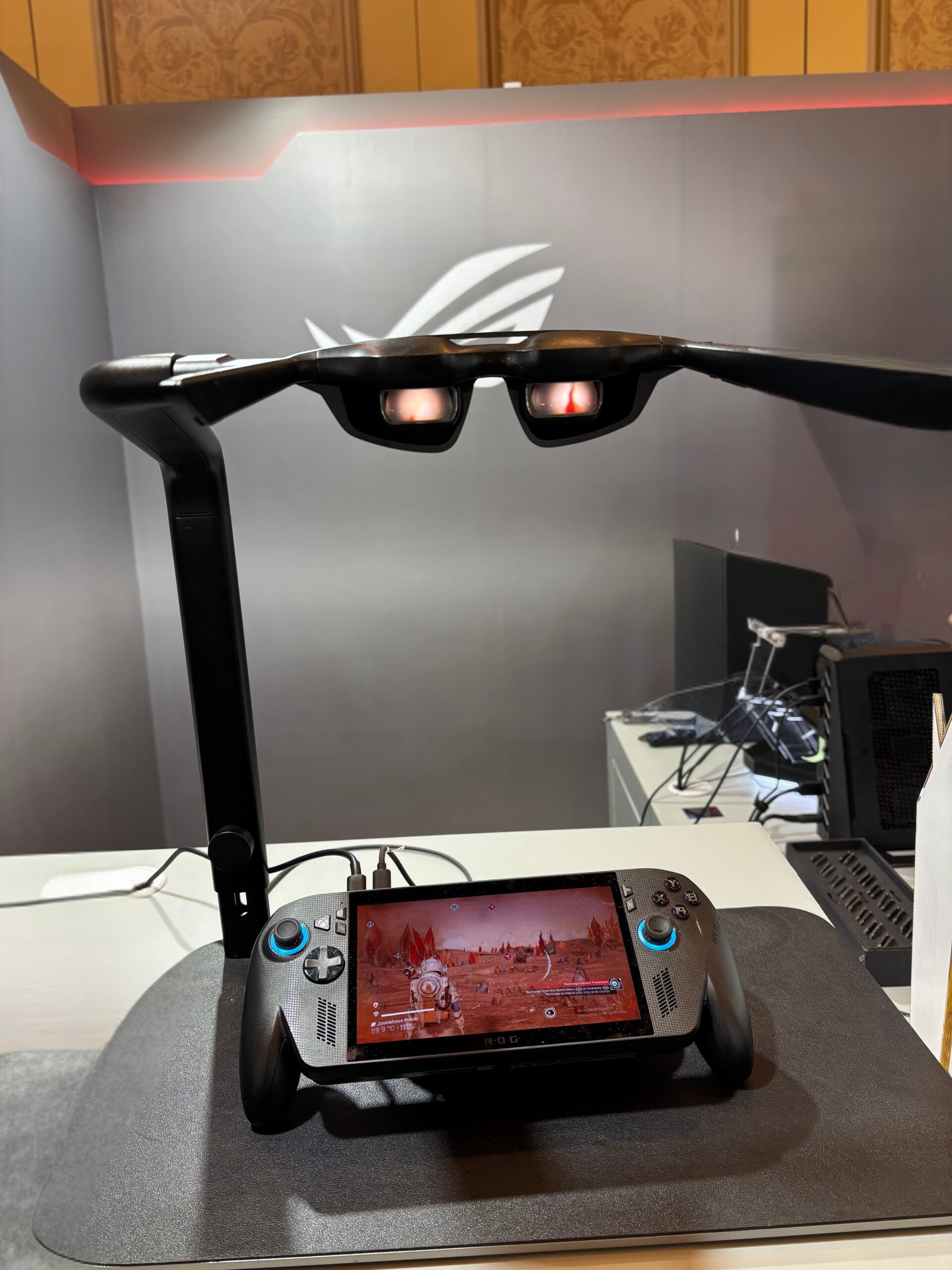
Smart glasses and immersive technologies are advancing rapidly, boosted by generative AI. Development cycles are short, validation is fast, and user value is immediate.
Robotics evolves more slowly because it is a system problem, not a feature problem. Safety, reliability, validation and physical constraints slow everything down by necessity.
CES revealed a two-speed technology landscape: software-led products scale in months, system-led technologies scale in years.
Healthcare and Wellness: innovation without visibility
Another signal came from what was missing.
Healthcare and wellness were barely visible at CES 2026. This does not reflect a slowdown in innovation. It reflects a mismatch between regulatory and clinical validation cycles and the pace of consumer tech shows.
Serious innovation does not always look spectacular, and CES is no longer where healthcare maturity is measured.
What CES 2026 really tells us
The message is clear: robotics is entering its professional decade.
The winners will not be those with the best demos, but those who mass produce faster, learn faster, and deploy reliably.
Buying a robot is not building a product. Demos do not create value. Systems do
CES shows what is possible, but industrialization decides what survives. Turning robotics and hardware innovation into real businesses requires engineering depth, system thinking and production discipline. It also requires knowing what is ready, what still needs time, and where effort will truly compound.
This is where the real work begins long after the noise fades.